
A cough that refuses to go away is one of the most common reasons people visit an internal medicine clinic. In Busan, the combination of dry winter air, spring yellow dust and pollen, and PM2.5 pollution makes chronic cough especially common. If your cough has lasted more than 2-3 weeks, it is time to see someone who actually specializes in the respiratory system — not just a general doctor who will hand you a week of cough syrup and send you home.
This guide explains what counts as a "chronic" cough, what usually causes it, and what tests to expect when you see an English-speaking pulmonologist in Busan.
When is a cough considered "chronic"?
Doctors generally use these definitions:
- Acute cough: less than 3 weeks — usually a common cold, flu, or other viral infection
- Subacute cough: 3 to 8 weeks — often a lingering post-viral cough
- Chronic cough: more than 8 weeks — needs proper evaluation
If your cough has crossed the 2-3 week mark without improving, do not wait. A simple consultation early is much better than letting it become a chronic problem.
Common causes of chronic cough
There are many possible causes of a cough that will not stop. The most common ones that pulmonologists look at include:
- Asthma (including "cough-variant asthma" where coughing is the only symptom)
- Post-nasal drip from chronic rhinitis or sinusitis
- Gastroesophageal reflux disease (GERD) — stomach acid irritating the throat
- Chronic obstructive pulmonary disease (COPD)
- Allergies to dust mites, pollen, mold, or pet dander
- ACE inhibitor medications (taken for high blood pressure)
- Post-infectious cough lingering after a viral illness
- In rare cases: pulmonary tuberculosis, bronchiectasis, or lung cancer
Because the causes are so different, guessing is not a good strategy. Proper testing is the only way to reach a clear diagnosis.
What a pulmonologist visit actually looks like
At Kim Joo-in Internal Medicine Clinic in Seomyeon, the typical visit for chronic cough looks something like this:
1. Medical history in English
Dr. Kim speaks professional English and will take a full medical history: when the cough started, what triggers it, whether it is dry or productive, your smoking history, any recent illnesses, medications you take, and any relevant family history. A thorough history often narrows down the likely causes immediately.
2. Physical exam
Listening to your lungs with a stethoscope is the most basic but most informative first step. Wheezing, crackles, or reduced breath sounds each point to different diagnoses.
3. Chest X-ray
A chest X-ray rules out pneumonia, tuberculosis, and large structural problems. It is quick and non-invasive.
4. Pulmonary function test (if needed)
If asthma or COPD is suspected, a pulmonary function test measures how well your lungs move air. This is one of the most important tools in respiratory medicine. You can read more about what to expect in our guide to pulmonary function tests in Busan.
5. Allergy testing (if needed)
If your cough seems to be linked to seasonal or environmental triggers, an allergy skin prick test can identify which allergens are causing the reaction. See our guide to allergy skin prick testing for details.
Why see a specialist instead of a general clinic?
There is nothing wrong with visiting a general internal medicine clinic for a short cough. But for chronic symptoms, the difference matters. Dr. Kim Joo-in spent 14 years as a professor specifically in respiratory and allergy medicine at one of Busan's major university hospitals. That means you are getting specialist-level evaluation in a walk-in neighborhood clinic setting — without the wait times and bureaucracy of a large hospital.
And because English is available, you can actually describe your symptoms in detail, understand the diagnosis clearly, and ask follow-up questions. That matters when you are trying to figure out why your body is not behaving the way it should.
About Kim Joo-in Internal Medicine Clinic
Dr. Kim Joo-in, M.D., Ph.D. is a board-certified internal medicine and pulmonology specialist. Before opening his own practice, he served as a Professor of Internal Medicine at Inje University Busan Paik Hospital for 14 years, specializing in respiratory and allergy medicine. He completed a clinical and research fellowship at Washington University in St. Louis School of Medicine and Barnes-Jewish Hospital in the United States, where he developed professional-level medical English.
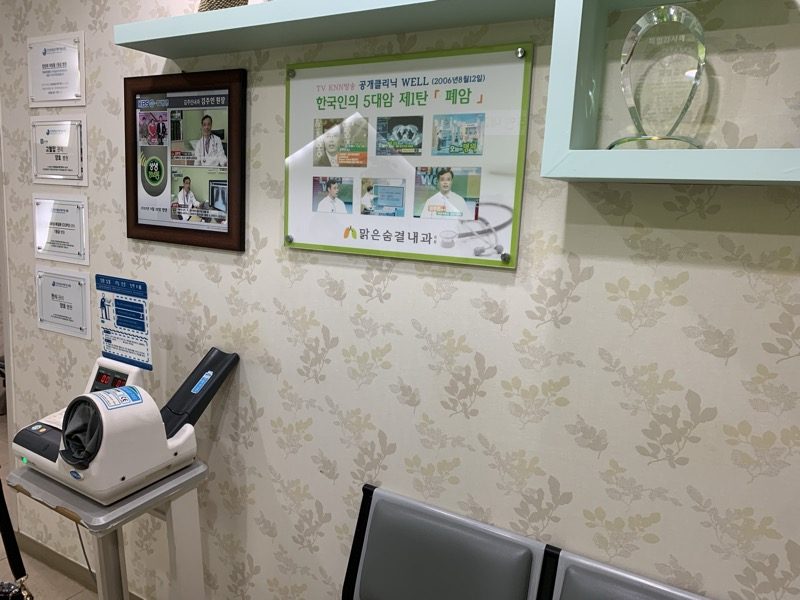
Dr. Kim has been recognized as a Best Doctor in Respiratory & Allergy Medicine by Busan Ilbo, and the clinic has received Outstanding Respiratory Disease Hospital recognition for three consecutive years from the National Health Insurance Review.
Clinic information
- Address: 8F Cheongseok Building, 64 Seomyeon-ro, Busanjin-gu, Busan
- Access: 5-minute walk from Seomyeon Station Exit 7 (Busan Metro Line 1 and Line 2)
- Phone: 051-802-7550 / 051-802-7552
- Hours: Weekdays 09:15–18:15 (lunch 12:50–13:50), Saturday 09:15–14:00 (no lunch break)
- Closed Sundays and Korean public holidays
- No appointment necessary — walk in during clinic hours
- English consultations available
Related Guides at Kim Joo-in Clinic
Frequently Asked Questions
How long should a cough last before I see a doctor?
If your cough has lasted more than 2-3 weeks without improving, it is worth getting evaluated. Coughs longer than 8 weeks are considered chronic and should definitely be assessed by a pulmonologist.
Do I need an appointment to see Dr. Kim Joo-in?
No. Kim Joo-in Internal Medicine Clinic operates as a walk-in clinic during business hours. Weekdays 09:15–18:15 (lunch 12:50–13:50), Saturday 09:15–14:00 (no lunch break). Closed Sundays and Korean public holidays.
Does Dr. Kim Joo-in speak English?
Yes. Dr. Kim completed a clinical and research fellowship at Washington University in St. Louis School of Medicine and Barnes-Jewish Hospital, and speaks professional-level medical English.
What tests might I need for a chronic cough?
It depends on your symptoms, but commonly includes a chest X-ray, a pulmonary function test, and sometimes allergy testing.
Where is the clinic located?
8F Cheongseok Building, 64 Seomyeon-ro, Busanjin-gu, Busan. It is a 5-minute walk from Seomyeon Station Exit 7 on Busan Metro Line 1 and Line 2.