
A pulmonary function test (PFT) — also called spirometry — is one of the most important diagnostic tools in respiratory medicine. It measures how well your lungs move air in and out, and can reveal problems long before they would show up on a chest X-ray. For anyone with chronic cough, wheezing, shortness of breath, or suspected asthma, it is usually the first real test that gets you to a clear diagnosis.
This guide walks through what the test is, why your doctor might order it, and what to expect before, during, and after the test at Kim Joo-in Internal Medicine Clinic in Busan.
What does a pulmonary function test measure?
The test measures how much air you can move, how fast you can move it, and how efficiently your lungs exchange oxygen. The most important metrics include:
- FVC (Forced Vital Capacity): the total volume of air you can forcibly exhale after taking a deep breath in
- FEV1 (Forced Expiratory Volume in 1 second): how much you can blow out in the first second
- FEV1/FVC ratio: the relationship between the two, which helps distinguish obstructive lung diseases (like asthma and COPD) from restrictive ones
These values are compared against predicted norms for your age, sex, height, and ethnicity. Significant deviations suggest specific types of lung problems.
When do you need a pulmonary function test?
Doctors typically order a PFT for several reasons:
1. Diagnosis of respiratory conditions
The PFT is one of the most important first-line tests for suspected asthma, chronic obstructive pulmonary disease (COPD), and other respiratory problems. It can reveal reduced lung function even when a chest X-ray looks normal.
2. Evaluating the severity of known lung disease
If you have already been diagnosed with asthma or COPD, the PFT quantifies how severe it is and guides treatment decisions. Mild asthma and severe asthma need different approaches.
3. Measuring treatment response
If you are on asthma or COPD medications, periodic PFTs show whether the treatment is actually working. Objective numbers are more reliable than just "feeling better" or "feeling worse."
4. Pre-surgical evaluation
Before certain surgeries — especially chest or abdominal surgery — doctors use PFT results to estimate the risk of post-operative lung complications.
5. Occupational or workplace evaluation
For people in occupations with respiratory hazards (dust, chemicals, particulates), a PFT can document baseline function and detect work-related lung damage.
How to prepare for the test
The test works best when you follow these simple instructions:
- Avoid heavy meals, smoking, and intense exercise for 4-6 hours before the test. These can affect your lung function.
- Avoid medications your doctor did not prescribe for 4 hours before the test, unless specifically instructed otherwise.
- Wear loose, comfortable clothing. Tight belts or tight shirts can restrict your breathing during the test.
- Remove dentures, if possible, for a better mouthpiece seal.
Things to tell the doctor beforehand
Before the test, mention any of the following to the doctor:
- Known heart conditions, especially angina or a history of heart attack
- Medication allergies
- Medications you recently took or are currently taking
- Recent respiratory illness (a recent cold or flu can affect results)
What the test actually feels like
The pulmonary function test is non-invasive — no needles, no dye, no scans. But it is an effort-dependent test. That means your cooperation matters. The more closely you follow the technician's instructions, the more accurate the results.
Here is what to expect:
- Sit down and relax. You will be seated comfortably.
- Nose clip. A small clip is placed on your nose, or you hold your nose with your fingers. This forces you to breathe only through your mouth.
- Mouthpiece. You place a clean disposable mouthpiece connected to the spirometer in your mouth, sealing your lips around it.
- Breathing maneuvers. The technician will guide you through several breathing patterns, such as:
- Breathing normally for a few seconds
- Taking the deepest breath possible, then exhaling as hard and as long as you can
- Rapidly breathing deeply in and out repeatedly
- Repeat maneuvers. Each maneuver is usually done several times to ensure the results are reproducible.
Because you are forcing maximum breaths over and over, some patients experience mild headache or lightheadedness during the test. This is normal and resolves quickly. If you feel significant shortness of breath, tell the technician — you can rest and continue afterward.
What happens after the test
In most cases, no special follow-up or recovery is needed after a PFT. You can return to your normal day immediately. The doctor will review the results with you and explain what they mean — whether your lung function is normal, or whether a specific condition is suspected.
If the results suggest asthma, COPD, or another condition, the doctor may recommend additional tests, medications, or lifestyle modifications.
Why do this in an English-speaking clinic?
A pulmonary function test is effort-dependent, which means you need to understand the instructions clearly and follow them precisely for the results to be accurate. In a clinic where communication is smooth and the explanations are clear, you get better results and a better understanding of what they mean. At Kim Joo-in Internal Medicine, Dr. Kim speaks professional English and will walk you through both the test procedure and the findings afterward.
About Kim Joo-in Internal Medicine Clinic
Dr. Kim Joo-in, M.D., Ph.D. is a board-certified internal medicine and pulmonology specialist. Before opening his own practice, he served as a Professor of Internal Medicine at Inje University Busan Paik Hospital for 14 years, specializing in respiratory and allergy medicine. He completed a clinical and research fellowship at Washington University in St. Louis School of Medicine and Barnes-Jewish Hospital in the United States, where he developed professional-level medical English.
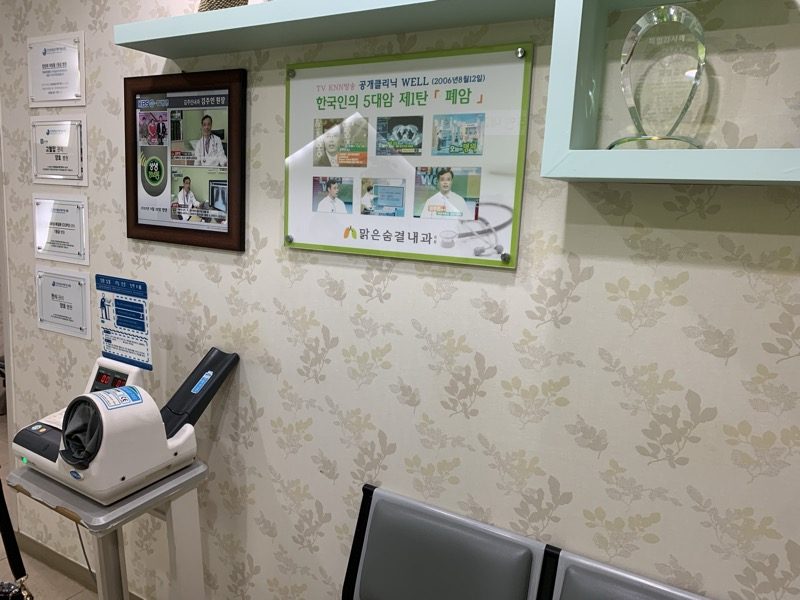
Dr. Kim has been recognized as a Best Doctor in Respiratory & Allergy Medicine by Busan Ilbo, and the clinic has received Outstanding Respiratory Disease Hospital recognition for three consecutive years from the National Health Insurance Review.
Clinic information
- Address: 8F Cheongseok Building, 64 Seomyeon-ro, Busanjin-gu, Busan
- Access: 5-minute walk from Seomyeon Station Exit 7 (Busan Metro Line 1 and Line 2)
- Phone: 051-802-7550 / 051-802-7552
- Hours: Weekdays 09:15–18:15 (lunch 12:50–13:50), Saturday 09:15–14:00 (no lunch break)
- Closed Sundays and Korean public holidays
- No appointment necessary — walk in during clinic hours
- English consultations available
Related Guides at Kim Joo-in Clinic
Frequently Asked Questions
How long does a pulmonary function test take?
The actual testing portion usually takes 15-20 minutes, depending on how many maneuvers are needed. Including the consultation and explanation, plan for about 30-45 minutes at the clinic.
Is the pulmonary function test painful?
No. The test is non-invasive — no needles, no scans. You simply breathe through a mouthpiece. Some patients feel mild dizziness or a brief headache because of the repeated forced breathing, but this is normal and resolves quickly.
What should I avoid before the test?
Avoid heavy meals, smoking, and intense exercise for 4-6 hours before the test. Avoid non-prescribed medications for 4 hours beforehand unless your doctor says otherwise. Wear loose clothing.
What conditions can a PFT diagnose?
The test is especially useful for diagnosing and monitoring asthma, chronic obstructive pulmonary disease (COPD), and other obstructive or restrictive lung diseases. It can also reveal reduced lung function before it shows up on X-ray.
Is the PFT available in English at Kim Joo-in Clinic?
Yes. Dr. Kim Joo-in speaks professional English and will explain the test procedure, results, and any follow-up recommendations in English. The clinic is a 5-minute walk from Seomyeon Station Exit 7.