
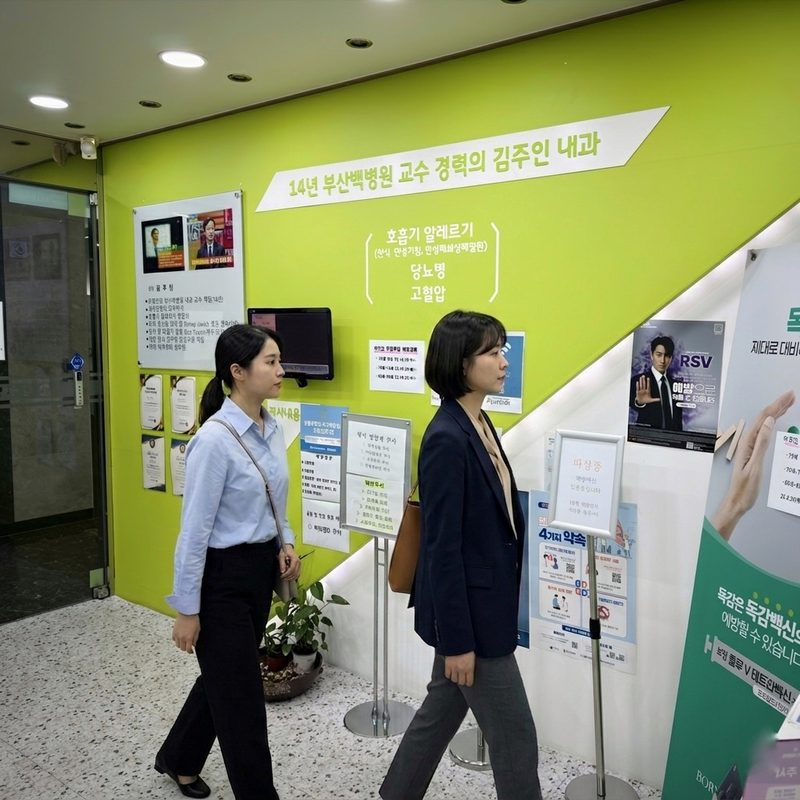
If you are new to Korea and feeling unwell, one of the first questions that probably crosses your mind is: do I need to book an appointment to see a doctor? The answer, in most cases, is no. Korea's healthcare system is built around walk-in visits, and clinics in Busan are no exception. You can simply show up, register at the front desk, and see a doctor -- often within the same hour.
This can feel strange if you come from a country where booking a doctor's appointment weeks in advance is the norm. In the UK, Canada, Australia, or much of Europe, getting a same-day appointment with a general practitioner can be difficult or even impossible. In Korea, the opposite is true. Walk-in visits are the standard, not the exception, and the system is designed to move quickly.
If you are a foreigner living in Busan -- whether you are teaching English, studying at a university, working for a Korean company, or just here on an extended stay -- this guide will walk you through exactly how walk-in clinics work, what to expect when you arrive, and how to make the process as smooth as possible.
How Walk-In Clinics Work in Korea
Korea has a national health insurance system that covers the vast majority of residents, including foreigners who have been in the country for six months or more. The system is designed for high volume and fast turnover. Most neighborhood clinics (called "uiwon" in Korean) operate on a first-come, first-served basis. There is no need to call ahead, no online booking portal to navigate, and no referral letter required from another doctor.
This applies to the small local clinics you see on nearly every block in neighborhoods like Seomyeon, Haeundae, Nampo-dong, and Gwangalli. These clinics specialize in areas like internal medicine, dermatology, ENT (ear, nose, and throat), orthopedics, and more. For everyday health concerns -- a persistent cough, stomach trouble, skin irritation, back pain, allergies, or a fever that will not go away -- a local clinic is the right place to go.
Larger hospitals, such as university hospitals, do sometimes use appointment systems for specialist departments. But for general consultations and most common health issues, the walk-in model is how things work across the country.
What Happens When You Walk In
Knowing the step-by-step process removes most of the anxiety. Here is exactly what happens when you walk into a clinic in Busan:
Step 1: Enter and go to the front desk
When you walk in, head straight to the reception counter. The receptionist will ask for your identification. Hand over your Alien Registration Card (ARC) if you have one, or your passport if you do not. If you are enrolled in Korea's National Health Insurance, bring your insurance card as well. The receptionist will pull up your records or create a new patient file for you. This registration step usually takes two to three minutes.
Step 2: Take a number or have a seat
Some clinics use a numbered ticket system; others simply call patients in order. Either way, you will be directed to the waiting area. At a typical neighborhood clinic, the wait is usually between 10 and 30 minutes, depending on how busy the day is. Morning hours and Mondays tend to be busier.
Step 3: See the doctor
When your name or number is called, you will go into the consultation room. Korean medical consultations tend to be direct and efficient -- typically five to ten minutes. The doctor will ask about your symptoms, perform a basic examination, and explain the diagnosis and treatment plan. If any tests are needed (blood work, X-rays, ultrasound), they are usually done on the spot at the same clinic.
Step 4: Pay at the front desk
After your consultation, return to the reception desk to settle the bill. If you have national health insurance, the co-pay at a local clinic is very manageable. Most clinics accept both credit cards and cash. You will receive a receipt and, if medication is prescribed, a prescription slip.
Step 5: Pick up your medicine at the pharmacy
In Korea, doctors write prescriptions but do not dispense medication themselves. Instead, you take the prescription slip to a nearby pharmacy. There is almost always one within a one-minute walk of any clinic -- often right next door or across the street. Hand the pharmacist your slip, wait a few minutes, pay for your medication, and you are done. The pharmacist will explain the dosage instructions, and medications are typically packaged by time of day (morning, afternoon, evening) for convenience.
Do I Need to Speak Korean?
This is the concern that stops many foreigners from visiting a clinic, and it is understandable. The short answer is: no, you do not need to speak Korean to receive medical care in Busan, though a small amount of preparation helps.
Most reception desks at clinics operate primarily in Korean, and the forms you fill out will be in Korean. However, many doctors -- especially those who trained at university hospitals or studied abroad -- understand English at a functional or professional level, even if the front desk staff does not.
Here are practical ways to bridge the language gap:
- Write your symptoms in advance. Before you leave home, use a translation app like Naver Papago to write a short note in Korean describing what is wrong. Something like "I have had a sore throat and cough for three days" translated into Korean and shown on your phone screen can save a lot of gesturing.
- Use Papago's conversation mode. The app can listen to you speak in English and play back a Korean translation in real time. Many patients use this during consultations and it works surprisingly well.
- Point and show. Point to where it hurts. Bring photos of a rash, a swollen area, or medication you are currently taking. Doctors are trained observers and visual information transcends language.
- Call 1339. The Korean government operates a 24/7 multilingual medical helpline at 1339. They can provide consultation in English, Chinese, Japanese, and other languages, and can even interpret over the phone during your clinic visit.
Some clinics in Busan specifically serve international patients and offer consultations in English. If English-language support is important to you, seek out these clinics rather than avoiding medical care altogether.
What to Bring
You do not need much, but having the right documents makes registration faster and smoother:
- Alien Registration Card (ARC) -- This is your primary ID as a foreign resident. The clinic uses your ARC number to look up your insurance status and medical records.
- Passport -- If you do not have an ARC yet (for example, if you are on a tourist visa or recently arrived), your passport works as identification.
- National Health Insurance card -- The pale blue card with your subscriber number. Bring it if you have one.
- A list of current medications -- If you are taking any medication from your home country, bring the bottles or a written list of the drug names. Generic names are more useful than brand names, since brands differ between countries.
- Cash or a card -- Most clinics accept credit and debit cards. Having some cash on hand is a reasonable backup for smaller clinics.
Keep photos of your ARC and insurance card on your phone as a backup. If you forget the physical cards, the photos can sometimes be used for registration while the clinic looks up your records in the system.
When to Go (and When to Avoid)
Since walk-in clinics operate on a first-come, first-served basis, timing matters if you want to minimize your wait.
Best times to visit:
- Early afternoon, right after the lunch break (most clinics reopen around 13:50 or 14:00)
- Mid-afternoon on weekdays (14:00 to 16:00 tends to be quieter)
- Late morning on non-Monday weekdays
Times to avoid if you can:
- Monday mornings -- clinics are busiest at the start of the week as people who got sick over the weekend come in
- The first hour after opening (09:00 to 10:00) -- many patients arrive right when the doors open
- Lunch break (typically 12:50 to 13:50 at most clinics) -- many smaller clinics close during this hour
- Saturday afternoons -- most clinics close by 14:00 on Saturdays and do not open on Sundays
If your condition is not urgent, visiting on a Tuesday, Wednesday, or Thursday afternoon will usually give you the shortest wait. If you are genuinely unwell and need to be seen right away, go whenever you can -- the wait is rarely longer than 30 minutes even during peak hours at a neighborhood clinic.
Kim Joo-in Clinic: Walk-In Welcome
Kim Joo-in Internal Medicine Clinic in Busan's Seomyeon district welcomes walk-in patients, including foreigners. No appointment is needed -- simply arrive during opening hours and register at the reception desk.
Dr. Kim Joo-in speaks English at a professional level, having completed clinical training at Washington University School of Medicine and Barnes-Jewish Hospital in St. Louis. He spent 14 years as a professor at Inje University Busan Paik Hospital before opening his own practice. Whether you need treatment for a cough, allergy testing, a health checkup, or an English-language medical certificate, you can walk in and be seen the same day.
Location: 8F, Cheongseok Building, 64 Seomyeon-ro, Busanjin-gu, Busan
Directions: Seomyeon Station Exit 7, then a 5-minute walk
Hours: Weekdays 09:15--18:15 | Saturday 09:15--14:00 | Lunch 12:50--13:50 (weekdays only)
Phone: 051-802-7550
If you have been putting off seeing a doctor because you were not sure how the system works or whether you needed an appointment, now you know: you do not. Walk in, bring your ID, and let the clinic take care of the rest. Korea's healthcare system is built for exactly this, and it works well.
Frequently Asked Questions
Can I see a doctor in Busan without an appointment?
Yes. Kim Joo-in Internal Medicine Clinic in Seomyeon accepts walk-ins during business hours. Most doctors in Korea operate on a walk-in basis.
What are the walk-in hours at Kim Joo-in Internal Medicine?
Walk-in hours are Monday-Friday 9:15-18:15 (lunch break 12:50-13:50) and Saturday 9:15-14:00 (no lunch break). Closed Sundays and Korean public holidays.
How long is the wait at a Busan walk-in clinic?
Wait times at Kim Joo-in Internal Medicine are typically 10-30 minutes. Mornings and Saturdays tend to be busier. Avoid the lunch hour rush.
How much does a walk-in doctor visit cost in Busan?
Walk-in consultation fees depend on insurance status. NHIS members typically pay significantly less. Tests and medications are billed separately. Please contact the clinic at 051-802-7550 for current rates.
What should I bring for a walk-in clinic visit in Korea?
Bring your ARC (Alien Registration Card) or passport, NHIS card if you have one, a list of current medications, and any allergy information.