If you are a foreigner living in Korea, you have probably heard people mention "health insurance" or "NHIS" without anyone really explaining how it works. Maybe your employer brought it up during onboarding, or a friend said you need to sign up for something. The whole system can feel confusing when everything is in Korean.
This guide breaks it down in plain language -- what NHIS is, whether you qualify, what it covers, and how to actually use it at a clinic.
What Is NHIS?
NHIS stands for National Health Insurance Service. It is Korea's universal public health insurance system, covering Korean citizens and eligible foreigners alike. Everyone who is enrolled pays a monthly premium, and in return, NHIS covers a large portion of your medical bills. When you visit a doctor or pick up a prescription, you pay only a small copay -- NHIS handles the rest.
It is a single-payer system. There are no competing plans to choose from. You are either enrolled or you are not.
Who Qualifies?
Not every foreigner in Korea is automatically covered. Eligibility depends on your visa type and length of stay.
Employed foreigners
If you work for a Korean employer on an employment visa (E-1 through E-7, H-1, etc.), you are enrolled from your first day. Your employer handles registration, and the premium is split between you and your company -- deducted from your paycheck automatically.
Long-term residents
Foreigners registered in Korea for six months or longer must enroll as regional subscribers, even without Korean employment. This includes freelancers, business owners, and certain long-term visa holders. You sign up at your local NHIS branch with your Alien Registration Card (ARC).
Students
International students on D-2 or D-4 visas who have been in Korea for six months or more are required to enroll. Most universities help with the process during orientation.
Dependents
If you are enrolled through employment, your spouse and children can be added as dependents on your plan at no extra cost, provided they meet certain income criteria.
Who is NOT covered
Tourists, short-term visitors, and foreigners here fewer than six months are generally not eligible.
What Does NHIS Cover?
Coverage is broad and includes most medical services you would need in daily life:
- Outpatient visits -- seeing a doctor at a clinic or hospital
- Inpatient care -- hospital stays and surgeries
- Prescription medication -- NHIS covers a portion at the pharmacy
- Diagnostic tests -- blood work, X-rays, ultrasounds, CT scans
- Dental basics -- scaling (once per year), fillings, and extractions
- Preventive care -- national health screenings and scheduled vaccinations
NHIS does not cover cosmetic procedures, elective surgeries, vision correction (LASIK/LASEK), teeth whitening, or experimental therapies.
How to Use NHIS at a Clinic
The process is simple once you have done it once:
- Bring your ARC and NHIS insurance card. If you do not have the physical card yet, your ARC alone is usually enough -- the clinic can look you up in the system.
- Hand them to the front desk. The receptionist registers you. First-time visitors may fill out a short intake form.
- See the doctor. Everything is processed under your insurance automatically.
- Pay your copay on the way out. For a standard clinic visit, this is a small fraction of the total bill.
- Pick up your prescription at a nearby pharmacy. The pharmacy also processes your insurance -- you pay only your copay for medication.
There are no claim forms to file and no reimbursement requests. The system handles everything in real time between the clinic, pharmacy, and NHIS.
What If I Don't Have NHIS?
Tourists, short-term visitors, and foreigners who have not yet reached the six-month threshold will not have NHIS coverage. In that case, you pay the full amount for any medical services.
The good news is that Korean healthcare is affordable by international standards, even without insurance. A clinic visit for a common illness will not break the bank, and prescriptions are similarly reasonable. If you need care, just walk into any clinic with your passport -- they will treat you and you pay the full fee at checkout.
For anything more serious like a hospital stay, costs without insurance can add up. If you are planning a longer stay, enrolling in NHIS as soon as you are eligible is strongly recommended. Some foreigners carry international travel insurance as a bridge in the meantime.
Free Health Checkups for NHIS Members
One of the most valuable but underused NHIS benefits is the free general health checkup. If you are enrolled, you are entitled to a comprehensive screening every two years at designated clinics and hospitals across the country, with no copay at all.
The screening includes blood tests (blood sugar, cholesterol, liver and kidney function), urine test, chest X-ray, blood pressure, vision and hearing tests, and body measurements. Members aged 40 and over receive additional cancer screenings based on age and sex.
Check your eligibility on the NHIS website (nhis.or.kr) or the NHIS mobile app. If you have been paying premiums but never used this benefit, it is well worth scheduling.
Common NHIS Questions Foreigners Ask
Can I use NHIS at any clinic or hospital?
Yes. There is no "in-network" or "out-of-network" distinction. NHIS works at virtually every clinic, hospital, and pharmacy in Korea.
What if I lose my insurance card?
Request a replacement at any NHIS branch or online. Your ARC is enough for most clinics to verify coverage in the meantime.
Do I have to pay premiums even if I never visit a doctor?
Yes. Enrollment is mandatory for all eligible residents, regardless of how often you use medical services.
Can I opt out?
No. If you meet the eligibility criteria, enrollment is compulsory. Exceptions are very limited -- mainly foreigners who can prove equivalent government coverage from their home country.
What happens if I leave Korea?
Permanent departure ends your coverage. Temporary absence does not, as long as you remain enrolled. Contact your local NHIS branch before an extended trip.
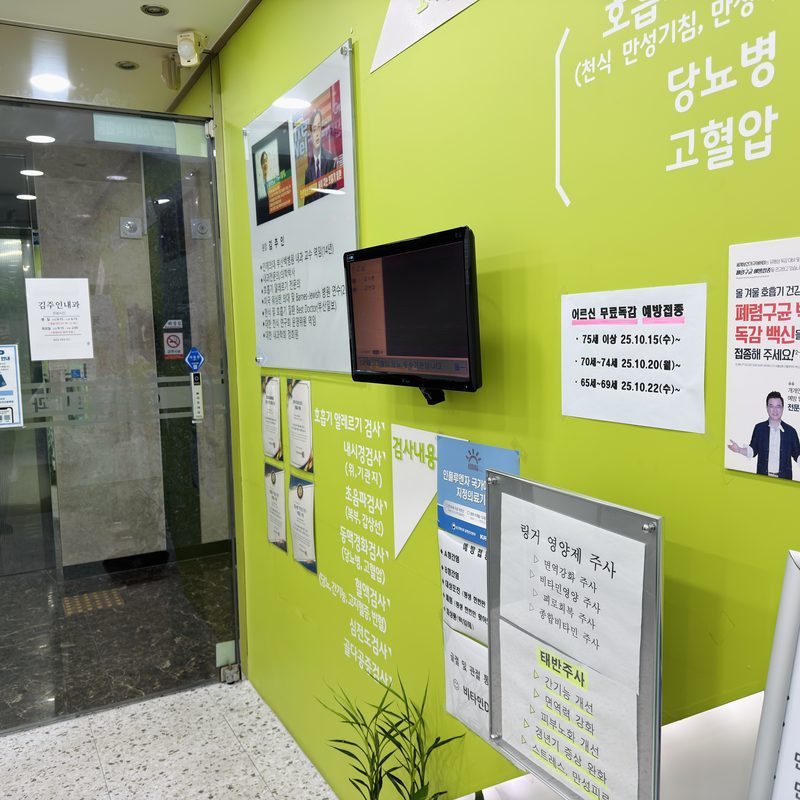
Kim Joo-in Internal Medicine Clinic in Busan Seomyeon accepts NHIS and welcomes foreign patients. The doctor speaks English, no appointment is needed, and the staff can help you navigate insurance questions on the spot. If you are unsure about your coverage, just bring your ARC and we will sort it out at the front desk.
Frequently Asked Questions
Can foreigners use Korean NHIS in Busan?
Yes. Foreigners with E-series visas (work visas), F-series (residency), and D-series (study) visas can enroll in NHIS after 6 months of residency. NHIS is mandatory for most long-term residents.
How much does NHIS cost for foreigners in Korea?
NHIS premiums for foreigners vary based on employment status, income, and assets. Employed workers contribute through their employer. For specific premium amounts, contact the NHIS office or check the official website.
Is NHIS accepted at Kim Joo-in Internal Medicine?
Yes. Kim Joo-in Internal Medicine accepts NHIS. Copay is significantly lower with NHIS coverage compared to paying out of pocket.
Can I see a doctor without NHIS in Busan?
Yes. Kim Joo-in Internal Medicine accepts patients without NHIS. You can request an itemized receipt for travel insurance reimbursement.
How do I sign up for NHIS as a foreigner in Korea?
Visit your local NHIS office with your ARC, passport, and a Korean address proof. Employees are auto-enrolled through their company. Self-enrollers register at any NHIS branch.