You're in Busan. You feel sick. You don't speak Korean. Now what?
This guide covers everything — from walking into a clinic to getting a prescription, and where to go if you need a doctor who can communicate in English.
Do I Need to Speak Korean to See a Doctor?
Not necessarily. Some clinics in Busan have doctors who can communicate in English. Most Korean clinic websites are Korean-only, and Google Maps reviews rarely mention language ability, so finding one takes some digging.
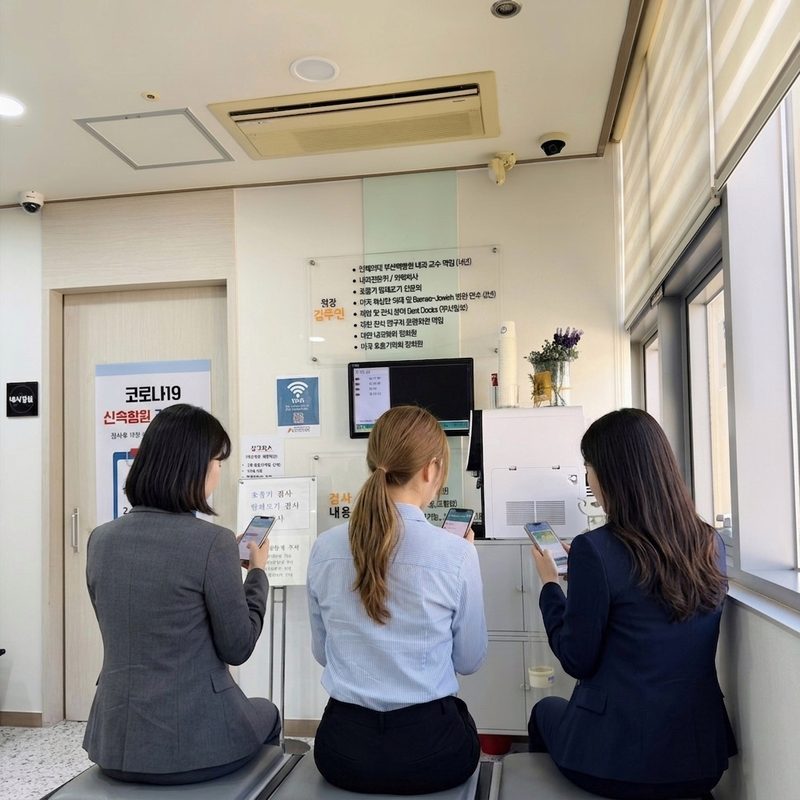
One option: Kim Joo-in Internal Medicine in Seomyeon. Dr. Kim studied at Washington University School of Medicine in St. Louis and completed clinical training at Barnes-Jewish Hospital. He can handle basic English medical consultations — enough to understand your symptoms and explain a diagnosis.
What Can You Get Treated For?
Korean internal medicine clinics handle more than you'd expect:
- Cold, flu, sore throat, fever
- Chronic cough that won't go away
- Asthma and allergies (big problem during yellow dust season, March–May)
- Stomach issues — and yes, you can get a gastroscopy (endoscopy) at a clinic
- Diabetes and hypertension management
- General "I feel terrible but I don't know why"
If you need surgery or emergency care, go to a hospital (Busan Paik Hospital, Haeundae Paik Hospital). For everything else, a clinic is faster, cheaper, and less overwhelming.
How Much Does It Cost?
Korean healthcare is affordable compared to most Western countries. If you're enrolled in Korean National Health Insurance (NHIS) — which includes most visa holders working or studying in Korea — costs are very reasonable.
Tourists: Pay out of pocket, get an English receipt, and claim through your travel insurance when you get home.
For specific pricing, call ahead — costs depend on which tests you need.
Do I Need an Appointment?
Most Korean clinics are walk-in. No appointment, no referral needed. Just show up during clinic hours with your passport (or ARC if you're a resident).
What About Prescriptions?
The doctor writes a prescription. You take it to any pharmacy (약국) — there's usually one on the same block. Pharmacists may not speak English, but the prescription is standardized so they'll fill it without issues.
English Medical Certificates (영문 진단서)
Need an English-language medical certificate? Korean clinics can issue 영문 진단서 (English medical certificates / doctor's notes). These are commonly needed for:
- Visa applications — embassy submissions for study abroad, work visas, immigration
- Travel insurance claims — proof of treatment with English documentation
- Employer requirements — sick leave verification for international companies
- University enrollment — health clearance for overseas programs
Kim Joo-in Internal Medicine issues English medical certificates on-site. If you're a Korean resident preparing to study or work abroad, or a foreigner who needs documentation in English, just ask at the front desk.
Yellow Dust & Allergy Season (March–June)
This catches every foreigner off guard. Yellow dust (황사) blows in from the Gobi Desert carrying fine particles, heavy metals, and allergens. Combine that with tree pollen and PM2.5, and you get:
- Non-stop sneezing and runny nose
- Itchy, watery eyes
- Cough that lasts weeks
- Worsened asthma
If over-the-counter antihistamines aren't helping after a week, see a specialist. Pulmonary function tests and allergy testing can pinpoint the problem.
Health Checkups for Foreigners
Korea is one of the best countries in the world for preventive health checkups. Equipment is modern, results are fast, and costs are a fraction of what you'd pay in the US, Canada, or Europe.
A comprehensive checkup can include: blood work, ECG, ultrasound (abdominal, thyroid, cardiac), gastroscopy, pulmonary function test, and bone density scan — often completed in a single morning.
Getting a Health Certificate for Teaching in Korea
If you're starting a teaching job, you need a health certificate. Most clinics can handle this. Bring your passport and passport-sized photos.
Where to Go
Kim Joo-in Internal Medicine
8F, Cheongseok Building, 64 Seomyeon-ro, Busanjin-gu, Busan
5 min walk from Seomyeon Station Exit 7
- Phone: 051-802-7550 / 051-802-7552
- Hours: Weekdays 09:15–18:15 | Saturday 09:15–14:00
- No appointment needed
- Basic English consultations available
- English medical certificates issued on-site
- Naver Map
Dr. Kim Joo-in's credentials:
- 14-year professor at Inje University Busan Paik Hospital
- Clinical training at Washington University School of Medicine & Barnes-Jewish Hospital
- Best Doctor award — Respiratory & Allergy Medicine (Busan Ilbo)
- 3 consecutive years: Outstanding Respiratory Disease Hospital
Frequently Asked Questions
How do I see a doctor in Busan without speaking Korean?
Visit an English-speaking clinic like Kim Joo-in Internal Medicine in Seomyeon. Dr. Kim can conduct full consultations in English. The clinic is 5 minutes from Seomyeon Station Exit 7.
How much does a doctor visit cost in Busan?
Consultation fees depend on your insurance status. NHIS members typically pay significantly less than those without coverage. Tests, medications, and procedures are billed separately. Please contact the clinic at 051-802-7550 for current rates.
What should I bring to a doctor visit in Korea?
Bring your ARC (Alien Registration Card) or passport, NHIS card if you have one, a list of current medications, and any relevant medical history or test results.
Do I need an appointment to see a doctor in Busan?
No. Most Korean clinics, including Kim Joo-in Internal Medicine, accept walk-ins during business hours. Hospitals require appointments for specialists.
How long does a doctor visit take in Korea?
Most general visits take 15-30 minutes including consultation and any prescriptions. Wait times are typically 10-30 minutes. Significantly shorter than many Western countries.